HAPPI Lab
In the HAPPI Lab, I'm designing a circuit and controller that takes measured skin and ambient temperature, along with a location and angle, and outputs a desired temperature. To evaluate it, I'll measure how much heat each coverage state removes, how long a region takes to return to its target temperature, and how much heating one tile affects its neighbors. This builds on my research last semester, where I identified the most effective shape-memory alloy (SMA) spring for actuating these tiles.
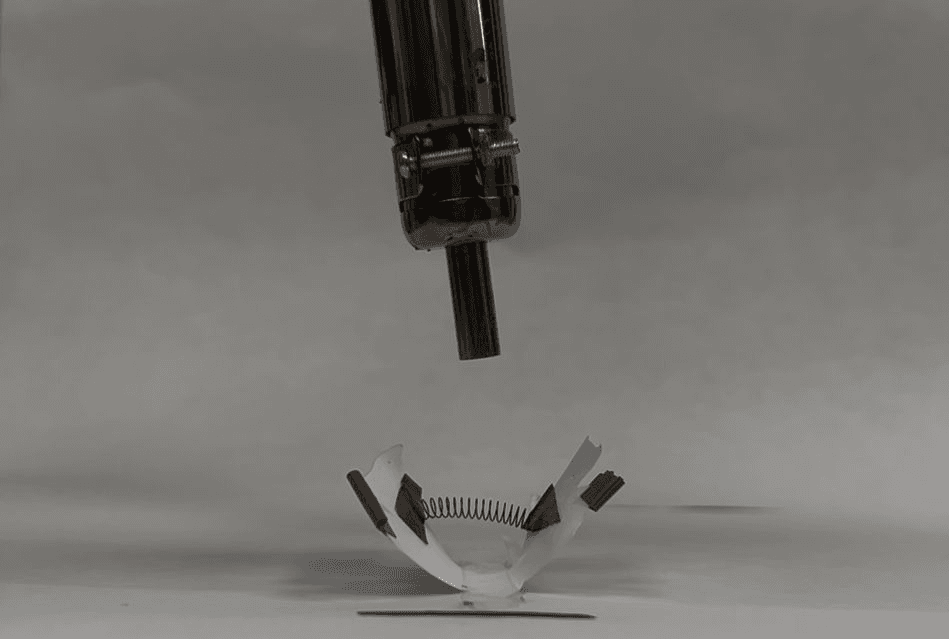
Three variables to optimize: time for the wings to open and close, minimum distance between the wing tips, and cost.
Filmed the wing against a white background on a tripod with markers and a 3cm reference line, heating the spring with a heat gun, then tracked the markers in computer vision to extract closing time and wing-tip distance.
Built and tested four spring configurations against two mandrel sizes, comparing time to close against minimum horizontal distance.
Fabricated wings in silicone, felt, and fabric and ran each through the same test to see which held the actuation best.
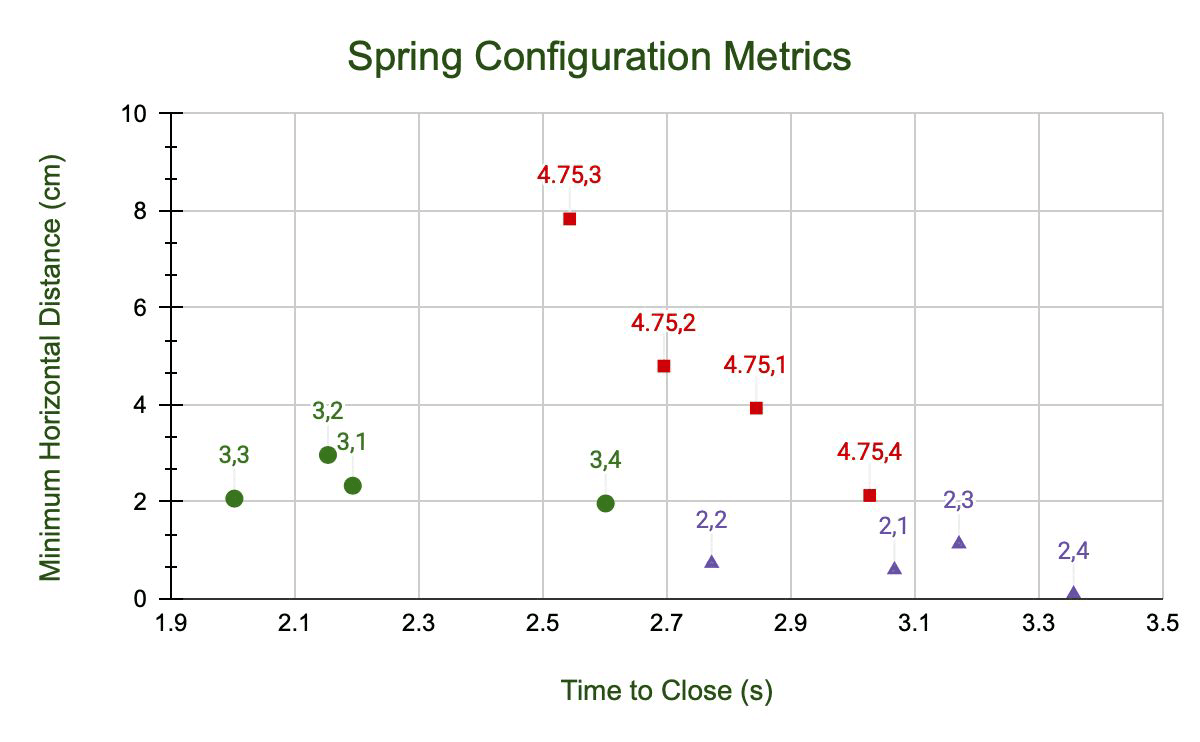
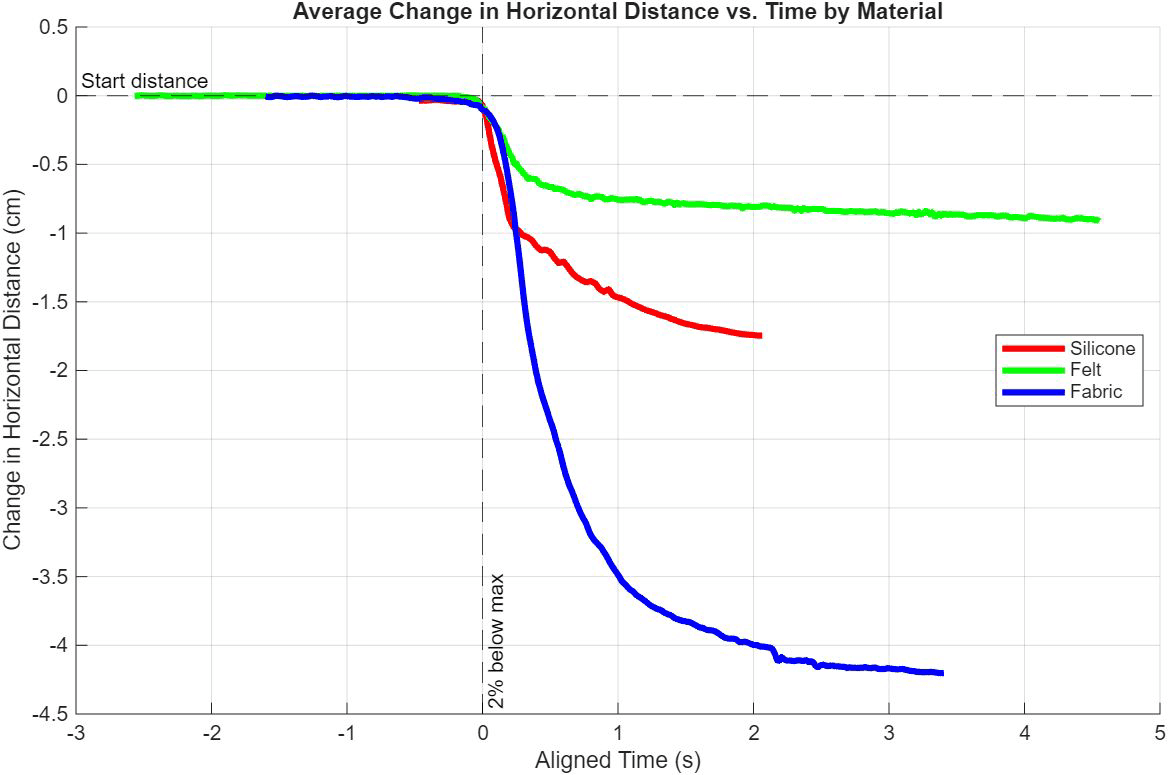
Best performing build: configuration 3 with a 3mm mandrel spring and a fabric wing. Next: a dedicated closing mechanism, paired opening and closing springs, resistive heating through the springs instead of a heat gun, and multi-spring configurations.